If you run a business that takes credit cards, you already know the math. Two to three and a half percent of every card sale leaves your account before you ever see it. On $500,000 a year in card volume, that’s $12,500 to $17,500 gone — money that never touches your payroll, your inventory, or your own pocket.
Surcharging is the legal mechanism that lets you hand that cost back to the customer who created it. But the moment a business owner starts looking into it, the same question comes up, and it’s the right one to ask: is surcharging legal in 2026, and specifically, is it legal where I operate?
The honest answer is that it depends on three separate layers of rules — federal law, your state’s statutes, and the card networks’ own rulebooks — and that those layers don’t always agree with each other. This guide walks through all three, state by state.
A note before we start: this is general information about how surcharging works in 2026, not legal advice. Laws in this area change frequently, and a few of them are actively being litigated. Confirm your specific situation with your processor and, where the stakes are high, with an attorney licensed in your state.
Quick answer: is surcharging legal in 2026?
Yes — in most of the country. As of August 2026:
- Three states ban credit card surcharging outright: Connecticut, Massachusetts, and Maine. Puerto Rico prohibits it as well.
- About ten states allow surcharging but attach caps, notice requirements, or specific posting rules: California, Colorado, Florida, Georgia, Kansas, Minnesota, New Jersey, New York, Oklahoma, and Texas.
- The remaining 37 states and Washington, D.C. have no surcharge statute at all. Card network rules are the only limit.
- Debit card surcharging is prohibited nationwide by Visa, Mastercard, Discover, and American Express — in all 50 states, with no exceptions, even in states that are otherwise wide open.
If you’ve read other guides and seen a different count — “two states,” “four states,” “ten states” — that’s because different sources count differently. Some include Puerto Rico as a state. Some still list California, Texas, Florida, and Kansas as ban states because those bans are technically still printed in the statute books even though federal courts have struck them down or rendered them unenforceable. We’ll untangle that below.
First, get the vocabulary right
A surprising number of compliance problems come from business owners using the wrong word for what they’re actually doing. Three terms get mixed up constantly, and they carry very different rules.
A surcharge is an added fee applied at checkout when a customer pays with a credit card. It’s calculated as a percentage, it appears as its own line on the receipt, and it exists specifically to recover your processing cost. This is what state surcharge laws regulate.
A cash discount (or dual pricing) works in the opposite direction. You post one price — the card price — and customers who pay cash get a reduction. Because you’re offering a discount rather than adding a fee, this structure is legal in all 50 states, including the three that ban surcharging entirely. That’s not a loophole; it’s written into most of the statutes explicitly.
A convenience fee is a flat dollar amount, never a percentage, charged for using a payment channel you don’t normally use — paying by card over the phone when you usually take checks in the mail, for example. Different rules, narrow application, and easy to get wrong.
One important warning here. Some processors sell “cash discount” programs that post the cash price on the shelf tag and then add a fee at the register for card payers. That is a surcharge wearing a different hat, and the card networks will treat it as one no matter what your processor calls it in the sales pitch. If the number on the tag goes up when a card comes out, you’re surcharging.
Layer one: the card network rules that apply everywhere
Before any state law enters the picture, Visa, Mastercard, Discover, and American Express impose their own requirements on every surcharging merchant in the country. Violating these can cost you your merchant account regardless of what your state permits.
The surcharge cap. Visa lowered its maximum surcharge from 4% to 3% in April 2023, and 3% remains the effective national ceiling in 2026 — Mastercard’s cap sits at 4%, but since almost every merchant surcharges at a single blended rate across all brands, Visa’s 3% is the number that governs in practice.
The cost-of-acceptance rule. Your surcharge can never exceed your actual cost of accepting that card, even if that cost is below 3%. If your effective processing rate is 2.4%, your surcharge is capped at 2.4%. Surcharging is a cost-recovery tool, not a profit center, and every major network enforces this.
Credit cards only. You may not surcharge debit cards, prepaid cards, or EBT — ever, anywhere. And running a debit card as “credit” at the terminal does not change its classification. Your point-of-sale system has to read the card’s BIN and disable the surcharge automatically on debit. If your POS can’t do that reliably, you should not be running a surcharge program.
Thirty days’ advance notice. You must notify your acquirer and the card networks at least 30 days before you begin surcharging, before you change your surcharge amount, and before you stop. Most merchants never do this themselves — a competent processor files it for you — but the obligation is real and fines for skipping it are not theoretical.
Disclosure at three points. Signage at the point of entry, signage at the point of sale, and a separate line item on every receipt. Online, the disclosure has to appear on the first page that references payment, before the customer commits.
That last one matters more than merchants expect. In our experience, far more surcharge problems come from sloppy signage than from anyone misreading a statute.
Layer two: the states that ban surcharging
Connecticut
Conn. Gen. Stat. § 42-133ff prohibits surcharges on any payment method — credit, debit, and digital wallets alike. It is one of the broadest bans in the country. Violations are treated as unfair trade practices under CUTPA, and the Department of Consumer Protection can assess penalties per violation on top of civil liability.
Cash discounts and dual pricing remain legal in Connecticut with clear, posted notice.
Massachusetts
Mass. Gen. Laws ch. 140D, § 28A bars any seller from imposing a surcharge on a customer who chooses to pay by credit card. It is one of the oldest surcharge bans in the country and one of the most consistently enforced. The Attorney General can bring an action, and private plaintiffs can sue under Chapter 93A.
Massachusetts also tightened the surrounding rules in September 2025, when the Attorney General’s “junk fee” regulations (940 CMR 38.00) took effect. Those rules require the total price a consumer will pay to be disclosed up front rather than assembled at checkout — which affects service fees, kitchen fees, and delivery charges even for businesses that weren’t surcharging in the first place.
Discounts for cash or check are expressly protected by the same statute that bans the surcharge.
Maine
Me. Rev. Stat. tit. 9-A, § 8-509 prohibits sellers from surcharging both credit and debit transactions. Bills to repeal or relax it have been introduced repeatedly, including in the 2025–2026 session, and the legislature has declined each time. The Bureau of Consumer Credit Protection takes consumer complaints directly.
There is a narrow carve-out for governmental entities collecting taxes, fines, and license fees — that exception does not extend to private businesses.
Cash discounts and dual pricing are legal in Maine when the regular price is displayed.
Puerto Rico
Not a state, but worth naming: Puerto Rico’s consumer protection law prohibits credit card surcharges for merchants operating in the territory.
Layer three: the states that allow surcharging with strings attached
| State | Limit | What the state requires |
|---|---|---|
| California | No statutory cap | Fee must be avoidable and disclosed; under SB 478, card-only sellers have to build it into advertised prices. B2B transactions are exempt. |
| Colorado | 2% or your actual merchant discount fee (C.R.S. § 5-2-212) | You must post the statute’s specific notice language on your premises or website, and itemize the surcharge on the receipt. No surcharge on cash, check, debit, or gift card redemption. |
| Florida | No enforceable cap | Fla. Stat. § 501.0117 still bans surcharging on paper, but the Eleventh Circuit struck it down in 2015 (Dana’s Railroad Supply v. Florida AG). Effectively legal. Since July 1, 2026, restaurants and public food service establishments must disclose any added “operations charge” — including a card surcharge — on menus, websites, ordering apps, and bills. |
| Georgia | Your actual cost | You have to offer a fee-free payment option, and disclose both the amount and the fact that it’s nonrefundable. |
| Kansas | No cap | The old ban was repealed. Clear, conspicuous advance notice of the amount at entry or point of sale. |
| Minnesota | 5% | Disclose per channel. You cannot surcharge your own store-branded card. |
| New Jersey | Your actual cost | Disclose the amount before the customer incurs a charge — a sign saying only “a surcharge applies” isn’t sufficient. For non-restaurants, signage at point of entry and point of sale; for restaurants, in the customer service area and on the menu, including online menus and QR menus. |
| New York | Your actual cost | GBL § 518 requires you to post the full dollars-and-cents price a credit card customer will pay. Percentage-only signage (“we add 3% for credit”) is illegal, even though the underlying practice is legal. Penalties run up to $500 per violation. |
| Oklahoma | Lesser of 2% or actual cost | SB 677 took effect November 1, 2025, repealing the old ban and replacing it with a regulated framework. Notice required at point of entry and point of sale in person, on the homepage and payment page online, and verbally for phone payments. Credit cannot be your only accepted payment method. |
| Texas | Your actual cost | Tex. Bus. & Com. Code § 604A.0021 bans surcharging, but the ban has been unenforceable since Rowell v. Paxton (2018). Disclose clearly, and never surcharge debit — Texas bans debit surcharging by statute independently. |
The remaining 37 states
Alabama, Alaska, Arizona, Arkansas, Delaware, Hawaii, Idaho, Illinois, Indiana, Iowa, Kentucky, Louisiana, Maryland, Michigan, Mississippi, Missouri, Montana, Nebraska, Nevada, New Hampshire, New Mexico, North Carolina, North Dakota, Ohio, Oregon, Pennsylvania, Rhode Island, South Carolina, South Dakota, Tennessee, Utah, Vermont, Virginia, Washington, West Virginia, Wisconsin, and Wyoming — plus Washington, D.C. — have no state surcharge statute. Card network rules are your only constraint.
A caution: several of these states are frequently misreported online as capped or banned. Those claims usually trace back to bills that were introduced and never passed, or to older laws that have since expired or been repealed. And a handful — North Carolina, Ohio, and Pennsylvania among them — have had bills pending that would add caps or disclosure requirements. “No law today” is not a promise about next year.
Debit is a separate question, and Louisiana just proved it
Because network rules already prohibit debit surcharging everywhere, most merchants assume state debit laws don’t matter. Louisiana closed that gap on August 1, 2026.
Act 751 (formerly SB 254), signed by Governor Landry on June 2, 2026, makes it unlawful for retail businesses in Louisiana to charge any additional amount for the privilege of paying by debit card. Credit card surcharging is untouched. But the law creates a private right of action — a customer can sue after giving the business written notice and 30 days to refund — and authorizes the Attorney General to seek civil penalties of up to $500 per violation, along with a consumer complaint hotline.
For a properly configured surcharge program, this changes nothing: debit was already excluded by design. For a program where debit detection is unreliable, or for a “convenience fee” program that applies a fee across all card types in a given channel, it’s a live exposure.
Texas and Maine also ban debit surcharging by state statute.
Why “is surcharging legal in 2026” needs a fresh answer every year
Look at what moved in roughly the last twelve months alone:
- Oklahoma flipped from a decades-old ban to a regulated 2% framework on November 1, 2025.
- Massachusetts layered new total-price disclosure regulations on top of its existing ban in September 2025.
- Florida added restaurant-specific surcharge disclosure requirements on July 1, 2026.
- Louisiana banned debit surcharges on August 1, 2026.
- Illinois pushed the effective date of its Interchange Fee Prohibition Act — the first-in-the-nation law barring interchange on the tax and gratuity portions of a transaction — from July 2026 to July 2027, after a federal court fight and an OCC preemption order.
- The Visa/Mastercard interchange settlement, announced in November 2025, received preliminary court approval on June 9, 2026. It would end the “honor all cards” rule, temporarily reduce interchange, and give merchants new rights to surcharge at the card-product level — meaning a higher surcharge on expensive premium rewards cards specifically. Final approval is still pending, and merchant groups including NACS have said they’ll appeal.
Every one of those items is a rule a merchant would have to react to. Any guide you find that hasn’t been updated this year is telling you about a landscape that no longer exists.
If you’re in a ban state, you’re not stuck
Connecticut, Massachusetts, and Maine all explicitly permit cash discounting and dual pricing. The structure is straightforward: you set your posted prices to reflect the card price, and customers who pay cash receive a discount at the register. Same economics, opposite direction, fully legal.
Two things make the difference between a dual pricing program that works and one that draws a complaint:
- The posted price must be the higher price. A customer paying by card should never see a number go up. If the shelf tag says $10.00 and the card total is $10.30, you have built a surcharge and called it something else.
- The discount has to be genuinely available and clearly signed. Post it at the door, at the register, and on the menu.
Dual pricing also tends to be the better structure for a brand-new business regardless of state, because customers never experience the change as a price increase — the price is simply the price from day one.
A practical compliance checklist
Before your first surcharged transaction:
- Confirm your state’s current status — ban, cap, or no law.
- Confirm the cap that applies. In Colorado and Oklahoma, 3% is too high; you need to be configured at 2%.
- Verify your surcharge does not exceed your actual cost of acceptance.
- Confirm your POS reliably identifies debit and prepaid BINs and suppresses the surcharge automatically.
- File the 30-day notice with your acquirer and the networks.
- Post signage at the point of entry and the point of sale.
- Confirm the surcharge appears as a separate line item on every receipt.
- For New York: post the full dollars-and-cents credit price, not a percentage.
- For Colorado: post the exact statutory notice wording.
- For restaurants in Florida and New Jersey: disclose on menus, including online and QR menus.
- For multi-state operations: verify each location separately. One national configuration will be wrong somewhere.
Frequently asked questions
Is surcharging legal in 2026? In most of the United States, yes. Connecticut, Massachusetts, and Maine ban it outright. About ten more states cap it or attach specific posting requirements. The rest have no surcharge law, leaving card network rules as the only limit.
Can I charge a flat 3% everywhere? No. 3% is the practical national ceiling under Visa’s rules, but Colorado and Oklahoma cap surcharges at 2%, and you can never exceed your actual cost of acceptance regardless of state. Three percent is illegal in the three ban states.
Can I surcharge debit cards? Never. Card network rules prohibit it in all 50 states, and running a debit card as credit doesn’t change that. Texas, Maine, and — as of August 1, 2026 — Louisiana ban it by statute as well.
What happens if I get it wrong? Three separate consequences, potentially at once: state penalties (New York’s runs up to $500 per violation, Connecticut’s is similar), card network fines that can escalate quickly, and termination of your merchant account. The network side is often the one that hurts most, because losing your ability to accept cards shuts you down.
Is a cash discount safer than a surcharge? It’s legal in more places — all 50 states — and it’s usually easier to explain to customers. Whether it’s the right choice depends on whether your prices are already published and how your customers are used to seeing them.
We handle state compliance for you — ask about the rules where you operate
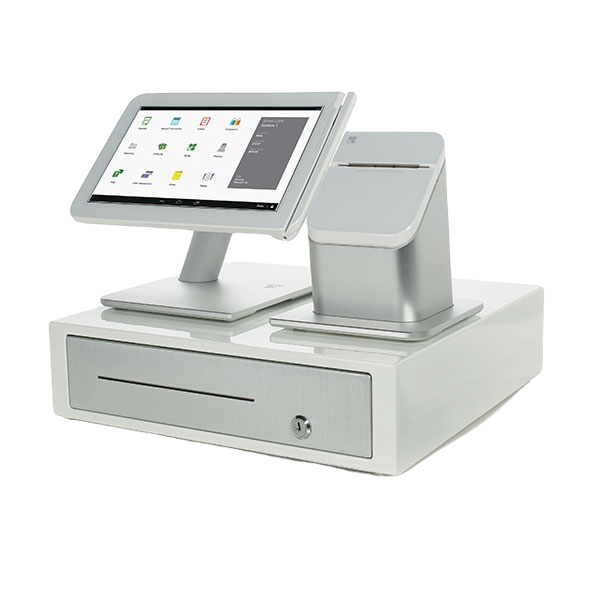
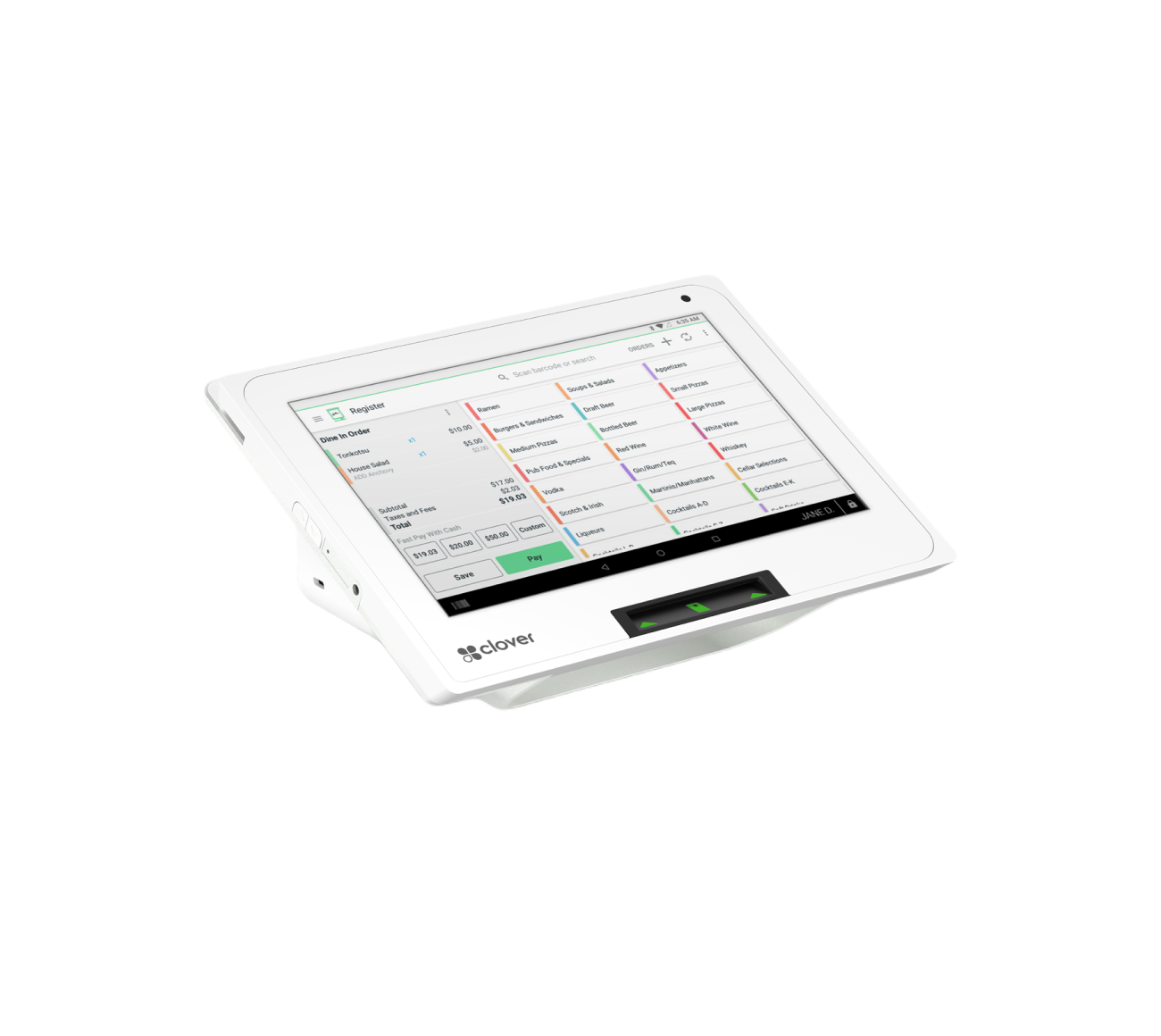
Merchant Marvels places free Clover POS equipment with businesses in all 50 states, and we configure your program to the rules of the state you actually operate in — the right cap, the right disclosure language, and debit detection that works, so the surcharge never lands on a card that can’t legally carry one.
If you’re in Connecticut, Massachusetts, or Maine, we’ll set you up on a cash discount / dual pricing program instead, so you keep the same economics without touching a prohibited practice. If you’re in Colorado or Oklahoma, we’ll configure at 2%, not 3%. And if you operate across state lines, we’ll go through your locations one at a time.
No upfront cost, no contract, no cancellation fee.
Tell us where you operate and we’ll tell you exactly what applies. Visit merchantmarvels.com or call to get set up.
Last reviewed August 2026. Surcharge laws change through legislation, regulation, litigation, and card network rule updates — several of the items in this guide moved within the last year. This article is general information, not legal advice.